


Sardinia 101: What First Time Visitors to Sardinia Need to Know

Updated: Sep 30
When Sardinia quietly crossed my radar a year or two ago as a great tourist destination, I didn't know where to start. It reminded me immediately of the Maltese adventures I've been on with similar architecture and a confounding backstory that makes visiting so intriguing. But what I came to find - is that Sardinia is a place entirely, uniquely it's own.
Below, discover what makes Sardinia so unique - from its ancient Roman history, to its fascinating Nuragic roots, learn about Sardinia from a first-time visitors perspective.
I'll share exactly what you need to know to feel educated stepping on Sardinian soil for the first time. Learn about the traditional foods in Sardinia, a brief overview of the history, what language to expect in Sardinia, and more.
Let's dive in!
Note: Always Pack Tissues represents many tried and tested travel sites as what is called an 'affiliate' partner. That means if you click on my ads I may get a commission from a resulting sale. As an Amazon Associate I earn from qualifying purchases. For information on how this may impact your privacy rights, please consult my privacy policy.

Short on Time?Common FAQs
Here are some helpful links to start planning your trip:More Sardinia Resources: |
Where Is Sardinia?
The huge island of Sardinia sits off the coast of Italy in the Tyrrhenian Sea. Sardinia has a land mass spanning 9300 square miles (about 170 miles from north to south and 90 East to west) and due to its size is not exactly a 'do-it-all-in-a-weekend' type of getaway.

How Long Do I Need to Visit Sardinia?
Many visitors to Sardinia focus in on one region, based on the type of vacation they are looking for. The eastern and northeastern parts of the Island are big for beach-goers and luxury seekers. The south is full of history, and everywhere in between you'll find unexpected gems like wineries, farmstays, ancient ruins, caves and more.
One week per region is a safe bet, but when I started planning my north to south trip, which focused on a route solely up and down the western parts of the island, one week didn't seem like enough - there is simply TOO much to see! Once I got there, I confirmed it - we had to miss so many sites, so of course now I'm planning...when can I go back!?
Pack as much as you can in for a full week, and plan to return! Or, stay 2+ weeks to really soak up the laid-back Island mentality.
Is one weekend enough to see Sardinia? No way. But, if you are visiting Cagliari on a cruise excursion, for instance, you can get a nice taste in one day - just enough to want to return for a longer trip!

Is Sardinia Part of Italy or France?
Sardinian citizens are Italian citizens.
The neighboring island of Corsica is French, and is a short 11km ferry (about 1 hour) from the northern port of Santa Teresa Gallura in Sardinia. Because the two islands are so close together, I can understand why it may be confusing which is French and which is Italian.
Although Sardinia is part of Italy, notice I wrote that Sardinian citizens are Italian citizens - but they commonly are not thought of as Italians when you speak about their heritage.

Since I write a lot about Spain I'll compare to the Basque Country and even Catalonia, where regardless of politics, these regions operate on their own wavelength - they have their own dialects, their own culture and folklore, and to my delight - their own varying types of cuisine.
Sardinia is indeed part of Italy, but if you ask them, or you ask a mainland Italiano, you may get different answers!
The Sardinian heritage stems from all the historical roots from the food to the language, which you will learn more about below!
What Language Do They Speak in Sardinia?
In Sardinia, because they are an Italian Island, you'd think the initial answer is Italian - which is not wrong. Sardinians speak Italian. However, they also have their own language called Sardo. You'll see evidence of this especially like in restaurant and hotel titles - "Sa Domu Cheta" (The Peaceful House).
The words "Sa" and "Su" come before many of the establishment names in Sardinia, and they effectively mean "the" in a feminine and masculine forms of the word, respectively. Think of it like Spanish - (el, los, la, las) and Italian, (il, lo, l', la, i, gli, le). More than you care to know, I know. But the idea is that Sardo - the unofficially official Sardinian language - is also as prevalent as Italian.
The plot thickens further though, Sardinians also have dialects like the Basque or the Catalonians, as referenced above. In some cases, like in Alghero, the Catalan influence from Spain is so heavy that many speak an offbeat version of Spanish and Italian, or Spangl-italian as I call it. I fit right in - I am always blending my four years of college Italian with my pseudo-fluency in Spanish from marrying a Spaniard. Spangl-italian, it is!
In short - be prepared for anything in Sardinia, and come with your Google Translate App handy!
What's the History of Sardinia?
If I were to sum all of the history of Sardinia, we might be here all day. So here's the basics:
During the prehistoric periods (we're talking hunter-gatherers) dating back to 500,000 years before Christ, there was a lot of activity in building the bones of what remains in Sardinia's top archaeological sites today.
The Paleolithic, Neolithic, Chalcolithic and Pre-Nuragic Bronze Age led Sardinia from the simplest of human times through to the building of such structures as their megalithic (stone) tombs and the pre-Nuragic civilizations that took hold for the near 1500 years before Christ.
The Nuragic Period that followed built incredible nuraghe (stone towers and structures) that dot the Island now as UNESCO World Heritage sites, like at Su Nuraxi. Then, came the Phoenicians.

The Phoenicians were merchant traders and slowly passed along their knowledge to the indigenous people of the island, leading to the Punic Period.
As you might guess, the Romans arrived thereafter, building cities, thermal baths, forums and the like all for life and entertainment on the island. They stuck around until well into the 5th century.

We're not done yet - next came the Byzantine Empire and the Arab raids in the 8th century, the Medieval Period, and even Aragonese and Spanish Rule, which is why Alghero is still very much Catalan-influenced.
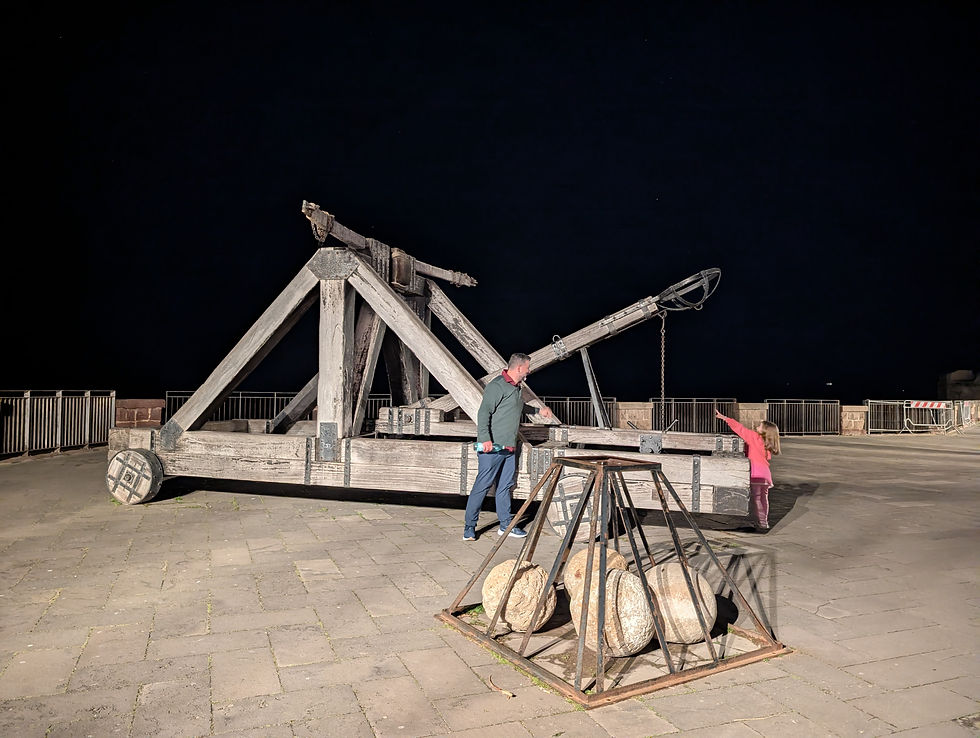
Sardinia in the 18th century became the Kingdom of Sardinia, and eventually in 1861 became part of Italy.
So you've got everything from cave men to traders, Arabs and Spaniards, Romans and more all influencing this great island. No wonder it is SO chock full of interesting ruins and ancient places to visit and delicious, diverse cuisine.
What are some Traditional Sardinian Foods?
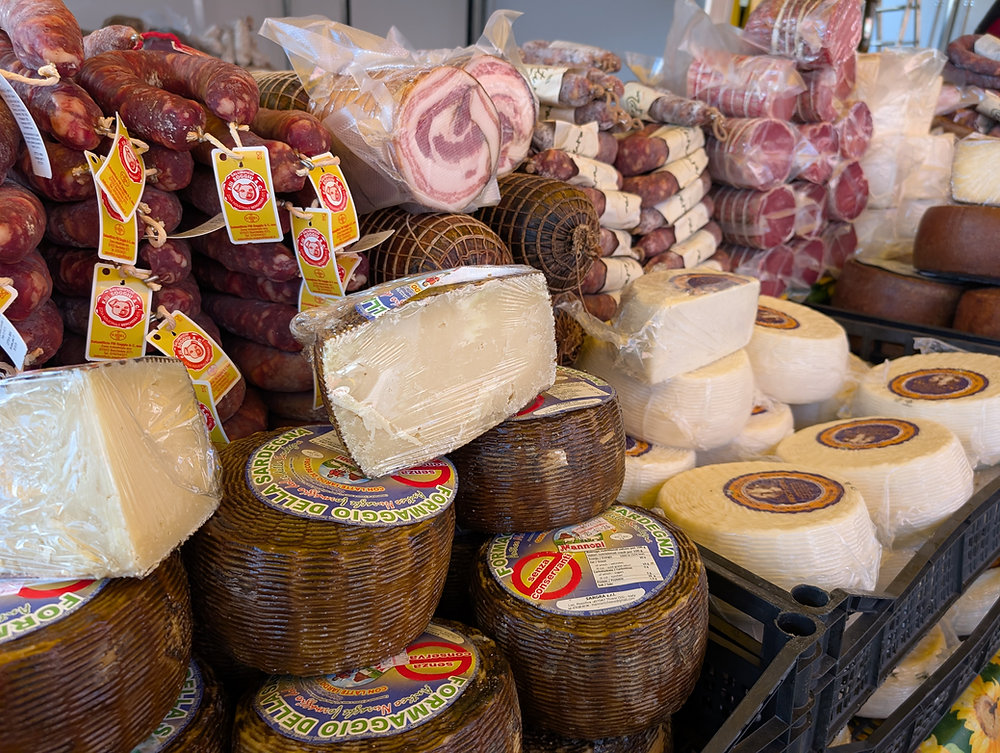
Visiting the markets in Sardinia, it will be quite evident - fresh, locally sourced ingredients are key to a delicious Sardinian meal.

Meal times in Sardinia are also very similar to in Spain or mainland Italy, so expect lunch hours to start around 1pm and dinner around 8pm. Be aware that while the dining hours are on, shops and sometimes even gas stations will be closed!
Here are some typical local flavors you will encounter on your travels to Sardinia:
Pasta and Meat Dishes
Porcheddu: a slow-roasted suckling pig with crispy skin and ooey gooey meat. This dish is deeply rooted in Sardinian heritage as a celebratory dish at weddings and festivals, and when served is a sign of great hospitality. Enjoy it!
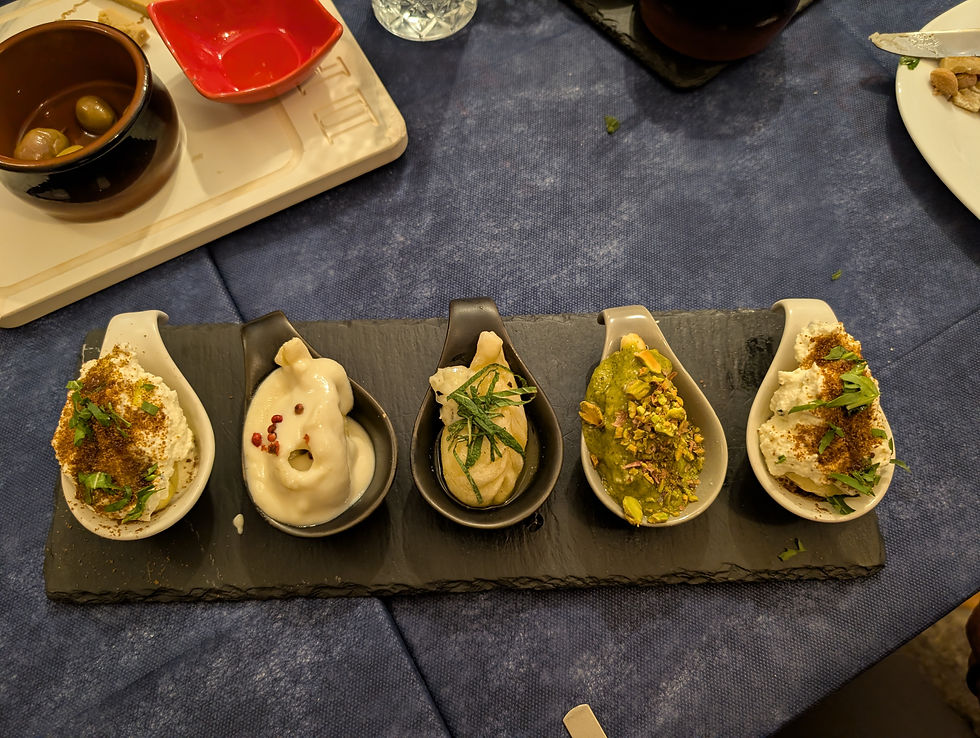
Culurgiones: a classic stuffed pasta filled with minty potatoes, you'll often to be invited to try your hand at making these in the cooking classes in Sardinia! Although you may think twice about mint, don't hesitate - it's a very faint flavor and does not overwhelm the dish at all.
Look at the '5 ways' plate we tried below, an inventive take on the classic culurgiones in Sardinia.
Bottarga: here's a unique one - it's pressed fish roe, salt-cured and air-dried to be shaved over pastas or put on appetizer plates. It stems back from Arab and Phoenician roots and is an excellent example of the unique flavors you can encounter on Sardinia! Although it sounds strange, think of the texture like a fish jerky meets a membrillo or guava paste.
Quite honestly, this was outstanding. We tried tuna bottarga (OMG) pictured on crackers below, we tried bottarga with artichokes (a common salad plate or antipasto), and a variety of bottarga pastas, like spaghetti with clams and bottarga. All were outstanding. Find the best bottarga near Oristano and Cabras.
I recently watched Anthony Bourdain's Sardinia episode of No Reservations, and he claims bottarga pastas to be his favorite. I get it, Tony. I do!
Fregola: this is the dish you'll see everywhere that resembles large toasted couscous pearls, but is cooked like risotto - often with seafood.
Reminding me of paella, we first ate this in Catalan-influenced Alghero. The flavors were nearly identical to me, but with the richness of an arroz caldoso dish (also Spanish), it was truly one of the most incredible ways I've seen these flavors put together in a plate before.
The one below was at Al Vecchio Mulino, and 100% worth going for.

Here is another representation of fregola, served for one person:

Various Pastas: here's where things get tricky. There are so many pastas on the menu that I did not recognize. Clearly, I was not the first to ask, because our first restaurant in Cagliari the waitress brought out this plate of different handmade pastas to explain to me the names and differences:

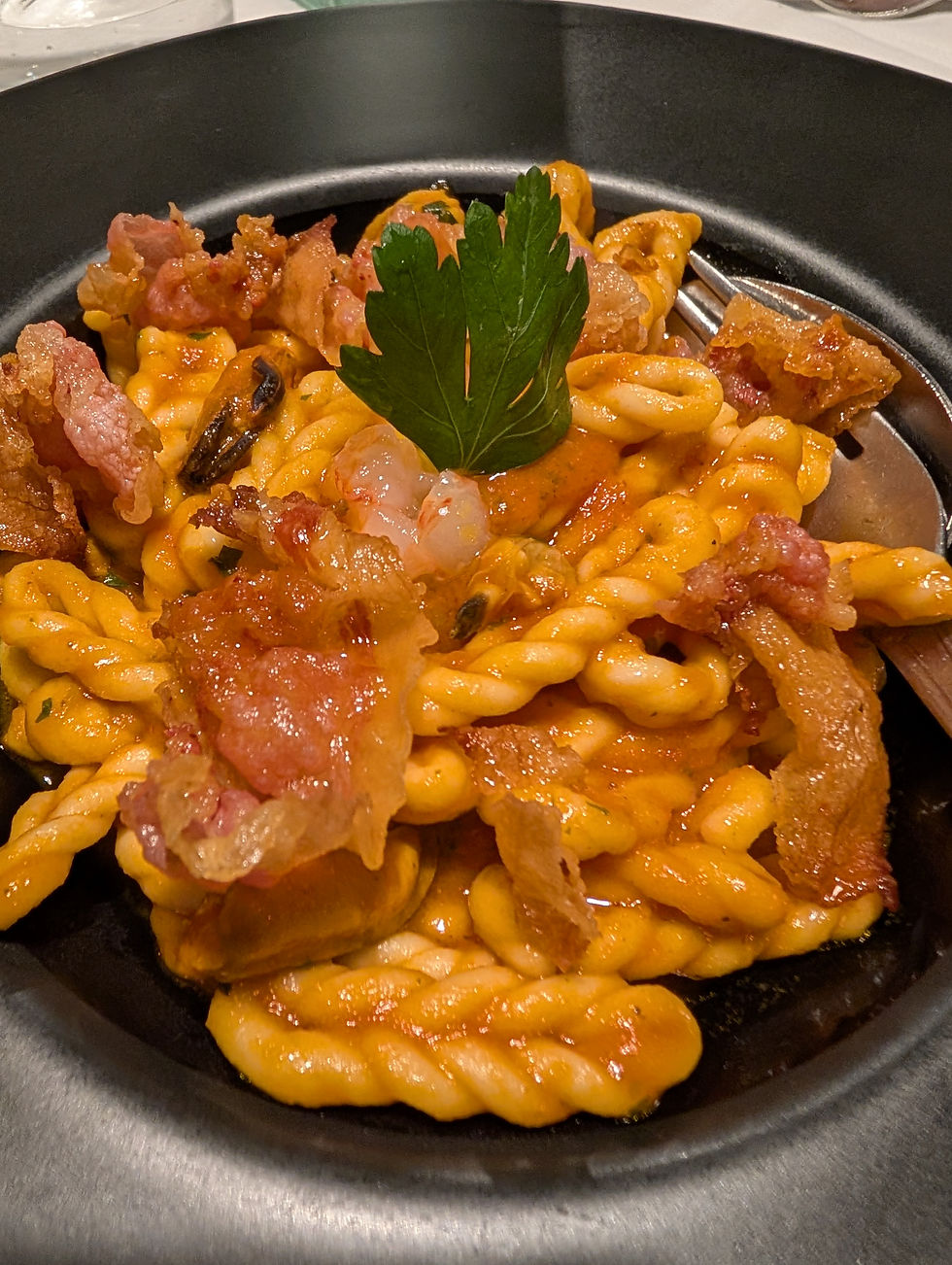
Above you see fregola and others, including the braided pasta called lorighittas. One of my favorite meals was this lorighitta dish, served with raw shrimp and crunchy pork.
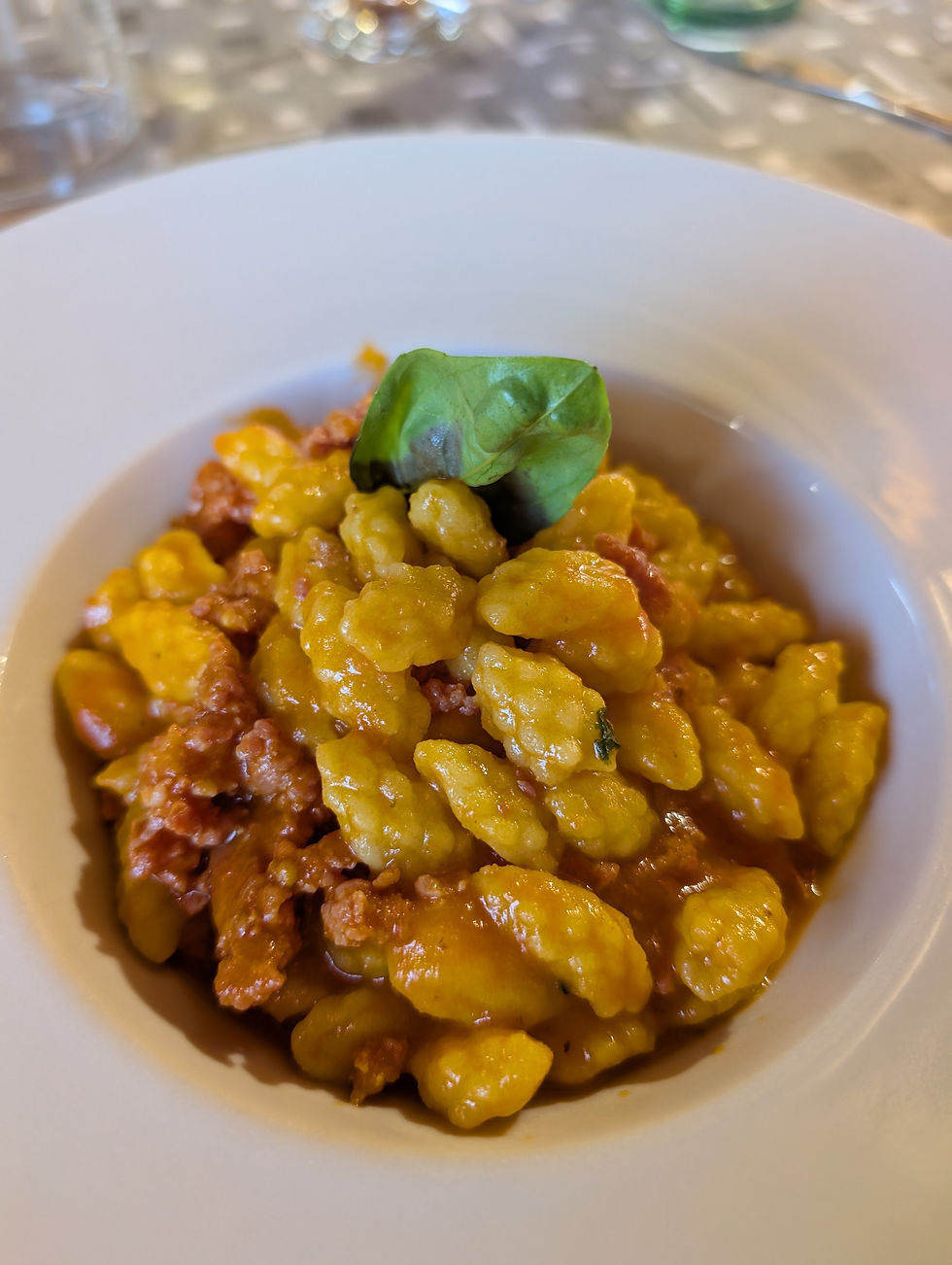
Another unique dish to Sardinia is the malloreddus pasta, also known as a gnocchetti sardi. My dad got this dish and was salivating over it for days.
CHEESE: I don't know what you've heard, but Sardinia is known for its pecorino. Get it. eat it. Trust. Sheep cheese is all the rage. Enjoy.
Bread, Desserts and Pastries
Pane Carasau: think like an Indian papadom, it's a wafer-thin, crispy flatbread and it is the breath of life in Sardinia. It sits at every table, at every meal, and serves as a plate, a cracker, a side dish, and as a conversation helper. It is everything!

Seadas: the not to be missed dessert for cheese-lovers, Seadas are pastries filled with pecorino cheese and drizzled with honey. You could say it resembles a toasted ravioli or an empanada, but inside you'll be surprised by a lemon burst of hot melty cheese in every bite, and you will be in love.

Wine Tasting in Sardinia
Wineries and vineyards can easily be found for wine tastings and tours in Sardinia. You will more than likely encounter the following three varietals:

Cannonau: a Sardinian red wine made with Grenache grapes. Notably my favorite varietal in Spain (Garnacha), the Sardinian red is as smooth and as tantalizing as its global grape neighbors in France and Spain but with one major perk - it is claimed to have three times the anti-oxidants as others of the same varietal.
By drinking it you will "Live to be a hundred", the Sardinia Tourism Board boasts; "Challenge Accepted", I say!
Malvasia Wine: For something uniquely Sardinian, try Malvasia white wine in the Bosa region along Sardinia's Western shores. There are many wineries also in the area of Tramatza. The white wine ranges from sweet, to dry and even sparkling, depending on the vintner and the method of production.

For a more widespread but no less native to Sardinia varietal, you will also find Vermentino, which is a lovely white wine found throughout Tuscany and other areas of Southern Europe, as well.

As a first-time visitors to Sardinia, be sure to remember one tip when ordering wine - forget the wine list! There is always 'vino della casa' available, typically vermentino if you want white, or cannanou if you want red, and a liter of it goes for around 10 euros.

Salute!
Logistics for Visiting Sardinia
How to Get to Sardinia
Accessible easily by a short overnight ferry from Genoa, or other ferries from Rome, you can also take puddle jumper flights on Ryan Air, Easy Jet, and other popular budget airlines.

Car Rentals and Driving in Sardinia
You will need a car rental for the best trip, and some know-how on driving in Europe. Learn more about Do's and Don'ts: First Hand Tips for Renting a Car Abroad.
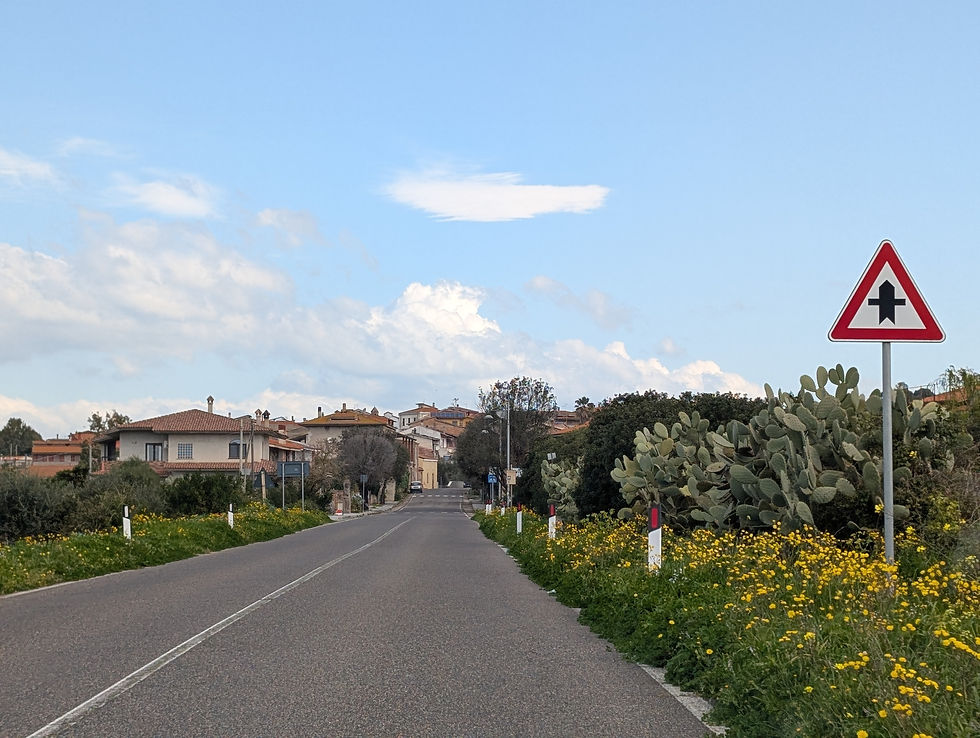
Round trip rentals from Cagliari are your best bet, but they can also be picked up in Alghero at the airport or other port of entry towns.
The roads are mostly in good condition, with pot holes being the worst thing you'll encounter. Well, and maybe the sheep!
The roads are gorgeous and the landscape varies wildly - from wild rosemary and herbs lining the roads, to yellow flowers as far as the eye can see. Then, cactus starts to pop up everywhere, and before you know it there's massive rock cliffs, snaking seaside drives, and mountainous climbs.
In short, you'll experience all kinds of driving in Sardinia.
Where to Stay in Sardinia
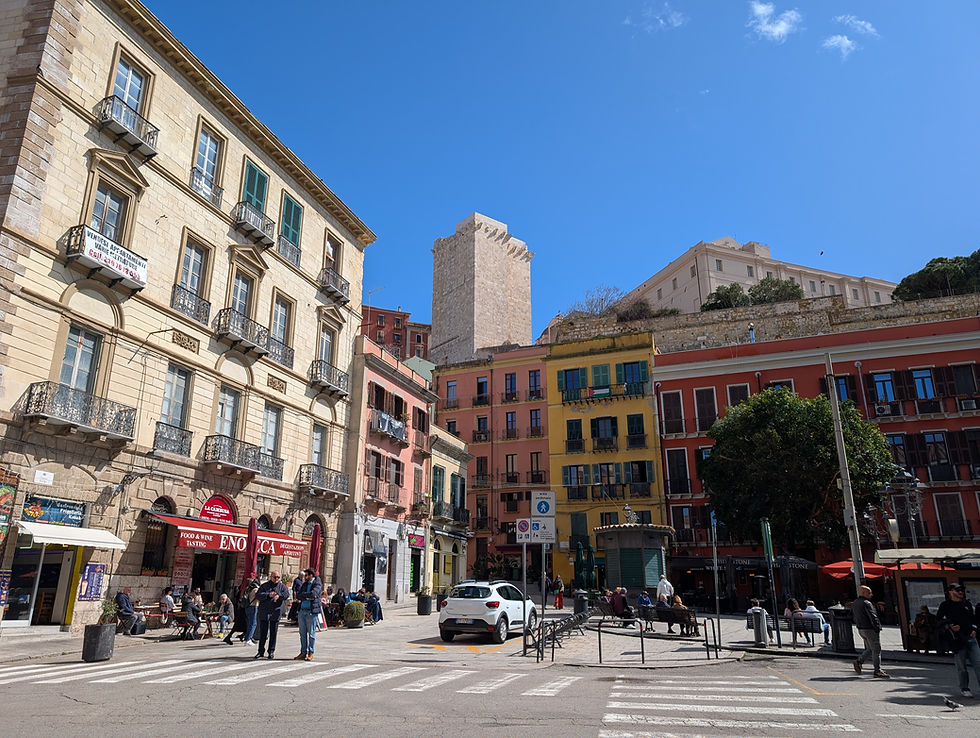
Hotel stays are commonly in places like agriturismos (farmstays with quaint restaurants attached), apartment rentals (typically in ancient buildings) or standard hotels, of which you will not find many big brand hotel chains.
We found many charming places to stay in Sardinia! You can learn about more of these in my other relevant articles, or start browsing hotels in Sardinia here.
Weather and What to Pack for Sardinia
Sardinia is a very seasonal destination, meaning if you go in the off-season you will be met with closures everywhere and quite the nip in the air. Be sure to plan for this by looking up the opening and closing dates of restaurants and museums, along with packing the proper windproof gear and added layers.
Summer months are very cosmopolitan featuring breezy linen wear, classy beach dresses, and strappy sandals (I recommend Solely Jane's for their mix and match interchangeable styles).
Hiking boots or good sneakers are a must for scrambling over rocky ruins, and athletic wear that wicks moisture is a good idea for touring days.
For Sardinia in March, I got by very well with a mix of layers including:
Weatherproof wind breaker
Packable down liner
Pullover sweater
Sweatery tops
Multiple moisture wicking bases
Jeans

Sneakers were worn daily, and at night I'd swap in knee-length boots with a cozy pencil skirt for a little extra class. I brought two scarves (one lightweight and breezy and one thicker) to use as a shawl or to block the wind, which they call 'mistral'. It's always windy, so prepare for that!
Leave room in your suitcase for a souvenir or two...I bought a leather jacket, which was the perfect wind cutter!
Did you know? Sardinia requires a Type L adapter (three round pins in a line) for charging your gadgets. Type C (two round pins) is common too, but you don't want to be stuck without the proper adapter for your trip. Buy your Tessan Type L Adapter for Sardinia here. Tessan is my favorite brand, and is well trusted for all of my adapter needs! Note: you don't need this, but it's a nice to have. Your two pin adapter will work too. |
Whether Sardinia is completely new to you as a destination, or you are just starting to plan your travels, I hope this article helped to build a foundation of understanding on the true melting pot of cultures, cuisine and fascinating history that Sardinia has to offer.



Comments